Childhood nutrition can feel overwhelming because parents are asked to balance health, preferences, schedules, school routines, growth needs, budgets, cultural traditions, and picky eating. Every meal can start to feel like a decision test. What should breakfast be? What can go in the lunchbox? Is the child eating enough protein? Are vegetables a battle? Is dessert allowed? A structured children’s diet plan can reduce this stress without turning food into a rigid rulebook.
For children, structure means rhythm, variety, and predictability. It does not mean strict dieting, calorie control, or pressure to eat perfectly. Children need enough energy to grow, learn, play, sleep, and develop. They also need a healthy relationship with food. A good meal plan supports both physical development and emotional safety around eating.
This guide is educational and should not replace advice from a pediatrician or registered dietitian, especially for children with allergies, medical conditions, growth concerns, feeding difficulties, neurodevelopmental needs, or a history of restrictive eating. The goal is to create meals that are balanced, kid-friendly, and realistic for family life.
What children need from food
Children need food for growth, brain development, immune function, bone strength, digestion, energy, and emotional regulation. Their meals should not be designed like adult weight-loss plans. They need enough calories and a wide range of nutrients.
Important nutrition foundations include:
– protein for growth and repair
– carbohydrates for energy and brain function
– healthy fats for brain development and satiety
– calcium and vitamin D for bones
– iron for blood health and energy
– zinc for growth and immunity
– fiber for digestion
– fruits and vegetables for vitamins and plant compounds
– fluids for hydration
No single meal has to be perfect. The pattern over days and weeks matters more than one lunchbox or one dinner.
The division of responsibility
One of the most useful concepts in child nutrition is the division of responsibility. In simple terms, parents decide what food is offered, when meals happen, and where eating takes place. Children decide whether to eat and how much to eat from what is offered.
This approach helps reduce pressure. Pressuring a child to clean the plate, bargaining for bites, or turning dessert into a reward can create more stress around food. Structure gives parents a plan, but children still need autonomy.
A supportive structure might include:
– regular meals and snacks
– balanced options at predictable times
– at least one familiar food at meals
– repeated exposure to new foods without pressure
– calm mealtime routines
– neutral language about food
– no shame around appetite differences
Children’s appetites vary. Growth spurts, activity, sleep, illness, and emotions can change hunger from day to day.
Building a balanced kid-friendly plate
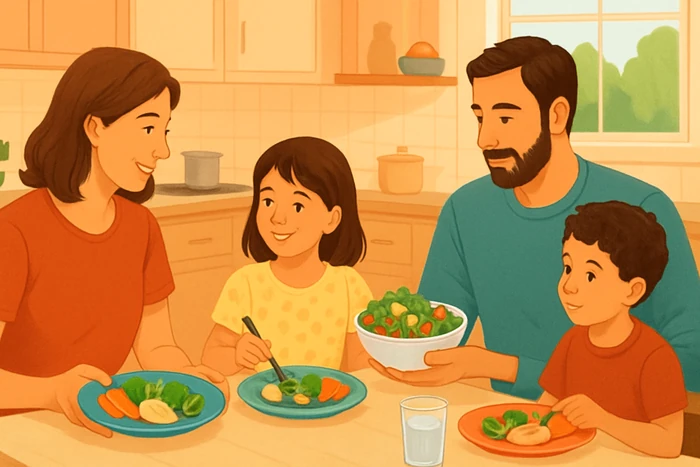
A structured children’s meal plan can use a simple plate pattern:
– protein food
– grain or starchy food
– fruit or vegetable
– healthy fat
– water or milk depending on needs
– familiar food when introducing something new
Kid-friendly protein options include eggs, yogurt, cheese, chicken, fish, beans, lentils, tofu, hummus, turkey, cottage cheese, and nut or seed butters when safe and age-appropriate. Grain and starch options include oats, rice, pasta, potatoes, bread, tortillas, quinoa, and whole-grain crackers. Fruits and vegetables can be fresh, frozen, cooked, blended, or served with dips.
A balanced dinner could be pasta with lentil sauce, cucumber slices, fruit, and yogurt. Another could be chicken, rice, roasted carrots, and avocado. A vegetarian option could be tofu, noodles, peas, and sesame sauce. The exact foods can reflect culture and family preferences.
Picky eating without panic
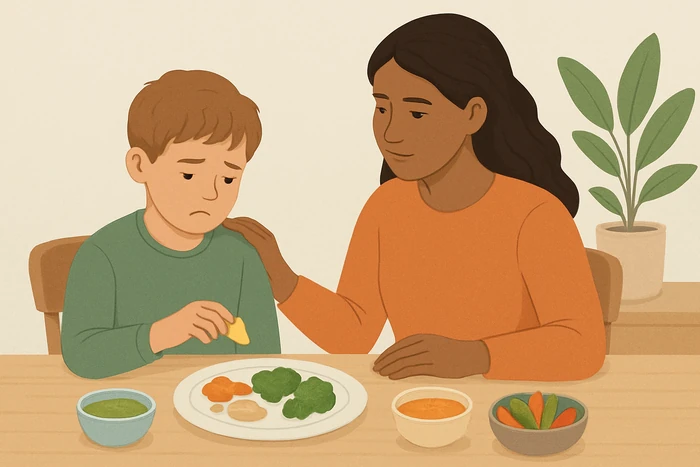
Picky eating is common. The goal is not to win every meal. The goal is repeated exposure and low-pressure consistency. Children may need to see a food many times before tasting it. Some children are more sensitive to texture, smell, color, or mixed foods.
Helpful strategies include:
– serve tiny portions of new foods
– pair new foods with familiar foods
– avoid forcing bites
– let children explore smell, touch, and appearance
– use dips if helpful
– offer vegetables in different forms
– keep mealtime calm
– avoid labeling the child as picky in a fixed way
– involve children in simple food prep
– repeat exposure over time
If picky eating is severe, causes growth concerns, or leads to very limited food variety, professional support is important.
Lunchboxes and school-day planning
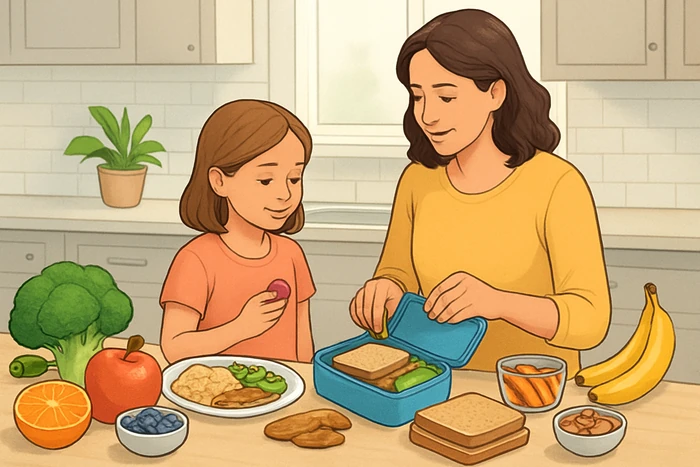
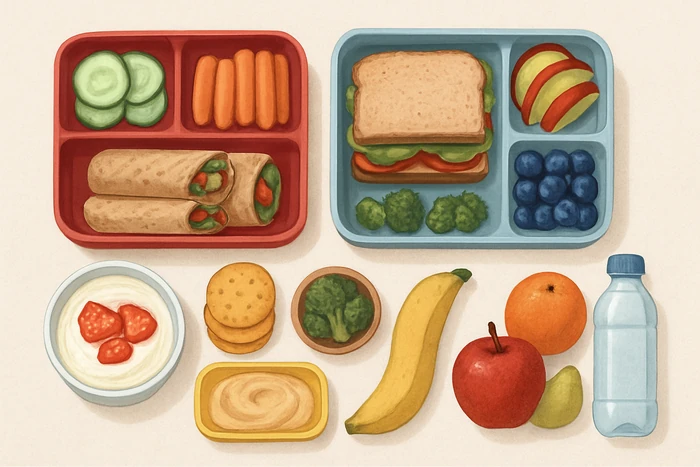
School lunches need to be practical. Children may have limited time, distractions, food rules, allergy policies, and preferences about temperature or texture. A structured lunchbox reduces morning stress.
A lunchbox formula:
– main protein or protein-rich food
– carbohydrate or grain
– fruit or vegetable
– healthy fat
– water
– optional fun food
Examples:
– hummus wrap, fruit, cucumber, and yogurt
– turkey or tofu sandwich, carrots, berries, and cheese
– bean and rice container, avocado, fruit, and water
– pasta salad with chickpeas, vegetables, and olive oil
– egg muffin, whole-grain crackers, fruit, and milk
– sunflower seed butter sandwich, apple, yogurt, and vegetables if nuts are not allowed
The optional fun food matters. Children do not need a perfect lunchbox. Including enjoyable foods can support a balanced relationship with eating.
Snack structure for steady energy
Snacks are useful for children because their stomachs are smaller and their energy needs can be high. Snacks should not be random grazing all day, but they can bridge the gap between meals.
Balanced snack ideas:
– yogurt with fruit
– cheese and whole-grain crackers
– apple with nut or seed butter
– hummus with pita and vegetables
– smoothie with fruit and yogurt
– boiled egg with fruit
– trail mix if age-appropriate and safe
– tofu cubes with rice crackers
– cottage cheese with berries
– beans or lentil dip with toast
A snack with protein or fat tends to last longer than a snack made only of refined carbohydrates. However, fun snacks can still fit within the overall pattern.
Nutrients parents commonly worry about
Parents often worry about whether children get enough protein, iron, calcium, vitamin D, omega-3 fats, and fiber. The answer depends on the child’s diet, growth, medical needs, and preferences.
Protein can come from animal or plant sources. Iron is found in meat, beans, lentils, fortified cereals, tofu, and leafy greens, and vitamin C foods can help with plant iron absorption. Calcium can come from dairy, fortified plant milks, calcium-set tofu, yogurt, cheese, and some greens. Vitamin D may require testing or supplementation depending on location and medical guidance. Omega-3 fats can come from fatty fish or plant sources such as chia, flax, walnuts, and fortified foods, though needs vary.
Fiber is important, but it should increase gradually. Children also need enough fluids. Too much fiber without enough energy can make some children fill up too quickly, so balance matters.
Meal planning for busy families
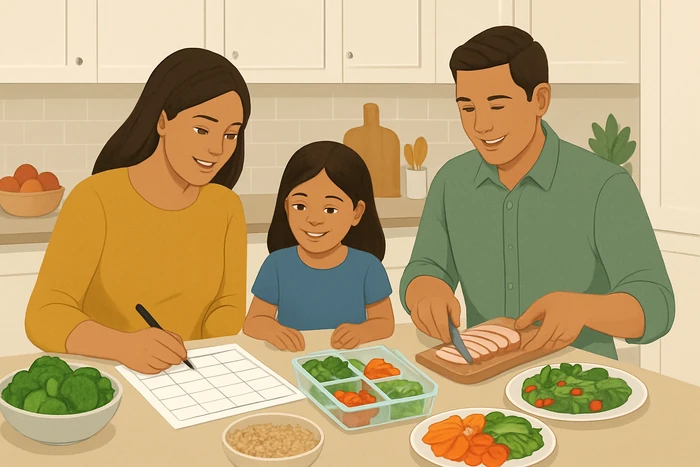
A structured plan should reduce stress, not add more work. Families can use repeatable meal themes instead of starting from zero every day.
Example themes:
– pasta night
– taco or wrap night
– breakfast-for-dinner night
– rice bowl night
– soup and toast night
– sheet-pan meal night
– build-your-own plate night
Parents can prepare components:
– cooked grains
– washed fruit
– chopped vegetables
– protein options
– simple sauces
– lunchbox snacks
– freezer meals
Children often respond well to predictability. A rotating plan can still include variety while giving the family a routine.
Protecting a healthy relationship with food
Children listen closely to how adults talk about food and bodies. A structured children’s diet plan should avoid shame, fear, or body-focused pressure. The goal is to teach nourishment, variety, and self-awareness.
Supportive language:
– “This food helps your body grow.”
– “Different foods do different jobs.”
– “You do not have to like it yet.”
– “Let’s try it another way next time.”
– “Your body can tell you when it is hungry or full.”
– “We eat many kinds of foods.”
Less helpful language includes moral labels such as “good” and “bad,” comments about weight, pressure to earn dessert, or using food as punishment. Children benefit from learning that all foods can fit, while some foods help the body more often and others are enjoyed sometimes.
Conclusion: structure should make feeding easier
A structured children’s diet plan is not about controlling every bite. It is about creating predictable meals, balanced options, and calmer decisions. Children need enough energy, protein, carbohydrates, fats, vitamins, minerals, hydration, and trust around food.
For parents, structure reduces the daily stress of deciding what to cook. For children, structure creates safety and repetition. With kid-friendly meal plans, familiar foods, low-pressure exposure, and balanced lunchboxes, families can support growth while protecting a positive relationship with eating.
The best children’s nutrition plan is not perfect. It is steady, flexible, nourishing, and kind.