A structured meal plan can create clarity, but it does not automatically create a lifestyle. Many people know what they intend to eat, when they want to prep meals, how much water they want to drink, and which routines would help them feel better. The difficult part is not always information. The difficult part is turning a plan into repeated behavior on busy, emotional, unpredictable days.
A custom healthy habits roadmap bridges the gap between intention and daily practice. It takes nutrition goals and connects them to real environments, real schedules, real triggers, and real human psychology. Instead of asking a person to rely on motivation forever, it builds routines that become easier to repeat with time.
This article focuses on behavioral change strategies that make a customized diet journey more sustainable. The goal is not to become perfect. The goal is to make healthy actions more automatic, flexible, and forgiving so they can support a lifelong lifestyle reset.
Why meal plans fail without behavior design
Meal plans often fail because they assume life will stay organized. They may tell someone what to eat, but not what to do when a meeting runs late, groceries are missing, a child needs attention, stress is high, or energy is low. A plan that only works under perfect conditions is not a lifestyle system. It is a fragile schedule.
Behavior design asks better questions:
– Where will this habit happen?
– What will trigger it?
– How much effort does it require?
– What could interrupt it?
– What is the backup version?
– How will success be measured?
– What environment makes the action easier?
For example, “eat a balanced breakfast” is a good intention, but it is not a complete habit. A better behavior design might be: “After I start the coffee, I will assemble yogurt, berries, and oats from ingredients already placed together in the fridge.” This version has a trigger, a location, a specific action, and fewer decisions.
Healthy habits become easier when they are designed for the life a person actually has, not the life they wish they had.
The psychology of habit formation
A habit is a behavior that becomes easier to repeat because the brain links it to a cue and a reward. At first, the behavior may require thought. Over time, the cue begins to start the routine automatically. This is why people can brush their teeth, make coffee, check messages, or take the same route to work with little effort.
Most habits include three parts:
– cue
– routine
– reward
The cue starts the behavior. The routine is the action. The reward tells the brain the behavior was worth repeating. In nutrition, the reward may be feeling prepared, having stable energy, reducing stress, enjoying flavor, or feeling proud of following through.
Many people try to build habits by focusing only on the routine. They say, “I need to meal prep.” But without a cue and reward, the habit feels like a task floating in space. A stronger version is: “After Sunday breakfast, I will wash and chop vegetables for three meals, then I will put on a favorite playlist and enjoy the rest of the morning knowing lunches are handled.”
Habit stacking: attach new actions to existing routines
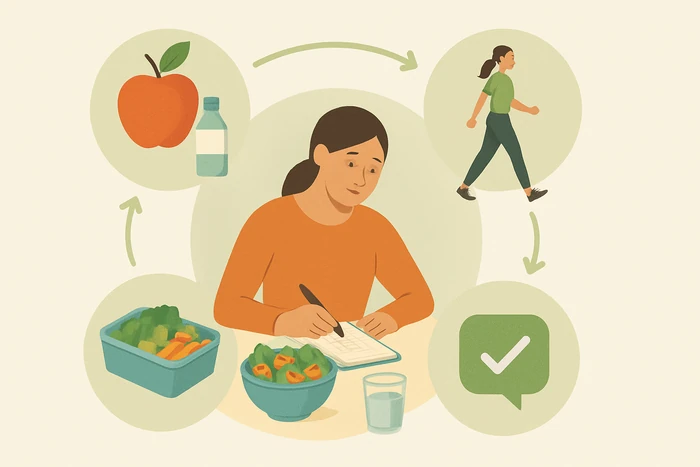
Habit stacking means attaching a new behavior to something already happening. This works because the existing routine becomes the cue. Instead of creating a habit from nothing, the person borrows momentum from a stable part of the day.
Examples:
– After brushing teeth, fill a water bottle.
– After making coffee, prepare a protein-forward breakfast.
– After unpacking groceries, wash fruit and vegetables.
– After dinner, pack tomorrow’s lunch.
– After closing the laptop, take a short walk.
– After putting dishes away, set out breakfast ingredients.
– After reviewing the calendar, choose tomorrow’s meal backup.
The formula is simple: “After I do [current habit], I will do [new habit].”
The new habit should be small enough to complete even on an ordinary day. If the stack is too ambitious, it becomes easy to skip. A person who is not currently meal prepping should not begin with a three-hour Sunday system. They may start with washing fruit, boiling eggs, cooking one grain, or preparing one sauce.
Small habits are not weak. They are the entry point for consistency.
Start with minimum viable habits
A minimum viable habit is the smallest version of a behavior that still counts. It protects consistency when life is messy. This matters because people often quit when they cannot complete the full version of a plan. A roadmap should include both the ideal version and the minimum version.
Examples:
– Ideal: cook a balanced dinner from scratch.
– Minimum: assemble a balanced plate from leftovers and ready foods.
– Ideal: meal prep five lunches.
– Minimum: prepare two protein options.
– Ideal: walk for thirty minutes.
– Minimum: walk for five minutes after lunch.
– Ideal: drink water steadily all day.
– Minimum: fill one bottle in the morning.
– Ideal: plan the full week.
– Minimum: identify the two busiest days and one backup meal.
The minimum version keeps the identity alive: “I am someone who returns to my habits.” This is more useful than all-or-nothing thinking. A lifestyle reset is built through repeated returns, not flawless streaks.
Design your environment before relying on willpower
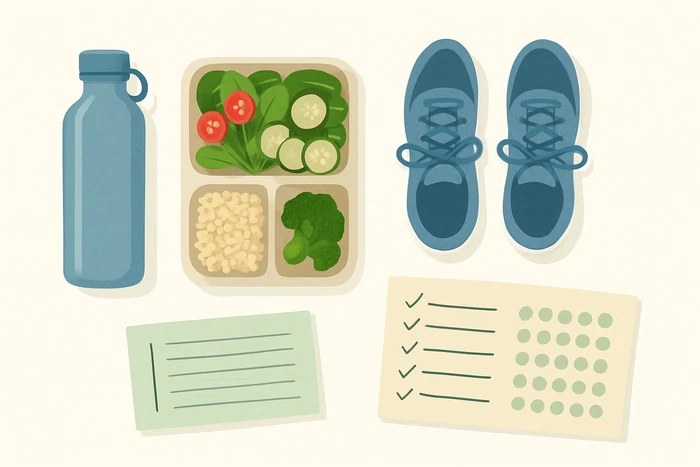
Willpower is limited. Environment is always present. A custom healthy habits roadmap should make helpful actions visible, easy, and convenient while making unhelpful defaults less automatic.
Environment design can include:
– keeping protein options ready
– placing fruit where it is easy to see
– storing washed vegetables at eye level
– keeping a water bottle on the desk
– planning grocery delivery before the week becomes chaotic
– keeping emergency meals in the freezer
– putting tempting snack foods in less visible places
– using smaller prep containers for quick assembly
– keeping a short list of reliable restaurant choices
– preparing a “busy day” shelf in the fridge or pantry
This is not about banning foods. It is about reducing decision pressure. A person is more likely to choose a balanced lunch if the ingredients are already cooked. They are more likely to hydrate if water is within reach. They are more likely to eat breakfast if the first step is obvious.
The easier behavior usually wins. Make the healthy behavior easier.
Build a personalized habit roadmap
A roadmap turns goals into a sequence. It prevents the common mistake of trying to change everything at once. The first step is choosing the highest-leverage habits: the ones that make other habits easier.
A practical roadmap might move through four phases.
Phase one: stabilize
Focus on the basics that reduce chaos. This may include regular meals, hydration, grocery routines, protein at breakfast, and one backup meal.
Phase two: simplify
Create templates. Use repeatable breakfasts, lunch formulas, grocery lists, and meal themes. The goal is fewer decisions.
Phase three: personalize
Adjust for energy, digestion, training, family schedule, work demands, budget, culture, preferences, and medical needs. The plan becomes more specific.
Phase four: automate
Turn routines into defaults. Place them on the calendar, connect them to cues, prepare the environment, and create backup versions.
A roadmap should not be too crowded. Three habits practiced consistently usually create more change than fifteen habits attempted for four days.
Make meal planning feel automatic
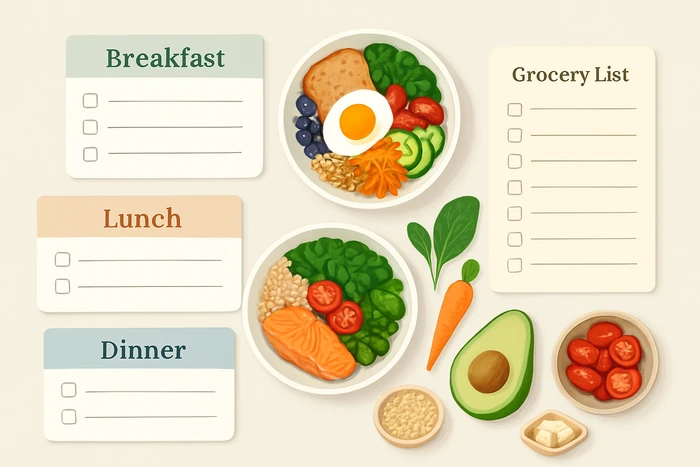
Meal planning becomes easier when it is treated as a repeatable system rather than a creative challenge. Many people dislike meal planning because they think every week must be new. A sustainable plan uses templates.
Useful templates include:
– three breakfast defaults
– three lunch formulas
– three quick dinners
– two snacks
– two emergency meals
– one grocery list framework
– one restaurant default
– one travel default
A breakfast template might be yogurt, fruit, oats, and nuts. A lunch template might be protein, grain, vegetables, sauce, and water. A dinner template might be sheet-pan protein and vegetables with potatoes or rice.
Templates reduce mental load. They also make personalization easier. A person can change ingredients without changing the structure. Chicken can become tofu. Rice can become potatoes. Yogurt can become a fortified plant option. The habit remains intact.
Use identity-based behavior change
Long-term change becomes stronger when habits are connected to identity. Instead of saying, “I am trying to follow a diet,” a person can practice thinking, “I am someone who plans meals that support my energy.” Identity does not need to be dramatic. It needs to be believable and repeatable.
Identity-based habits might sound like:
– I am someone who prepares before the week gets busy.
– I am someone who eats enough to support my day.
– I am someone who returns to routine after disruption.
– I am someone who keeps simple healthy options available.
– I am someone who listens to my body without ignoring structure.
– I am someone who makes food decisions with care, not panic.
Each small action becomes evidence for the identity. Filling a water bottle, packing lunch, adding protein to breakfast, or taking a walk after work may seem minor. But repeated evidence changes self-trust.
A healthy identity should feel supportive, not restrictive. It should help a person feel capable, not trapped.
Plan for friction before it happens
Every habit roadmap needs friction planning. Friction is anything that makes the desired behavior harder. It can be practical, emotional, social, or environmental.
Common friction points include:
– not having groceries
– not knowing what to cook
– feeling too tired to prepare food
– eating out frequently
– stress eating
– skipping lunch during work
– family members wanting different meals
– travel
– boredom with repeated foods
– unrealistic expectations
A strong roadmap uses “if-then” planning:
– If I miss grocery shopping, then I will use my freezer backup meal.
– If lunch is delayed, then I will eat my planned snack before I get overly hungry.
– If dinner feels overwhelming, then I will use the ten-minute meal option.
– If I eat differently at a social event, then I will return to normal structure at the next meal.
– If I get bored, then I will change sauces instead of changing the whole plan.
This turns obstacles into expected parts of the system. The goal is not to avoid disruption. The goal is to recover quickly.
Track behaviors, not only outcomes
Many people track only outcomes such as weight, measurements, or appearance. Those markers can be incomplete and emotionally loaded. A habit roadmap should also track behaviors because behaviors are the actions a person can directly control.
Useful behavior metrics include:
– number of balanced breakfasts per week
– number of planned lunches
– water bottle refills
– grocery planning completed
– protein included at meals
– vegetables added to meals
– walks completed
– bedtime routine followed
– meals eaten without rushing
– backup meals used instead of skipping
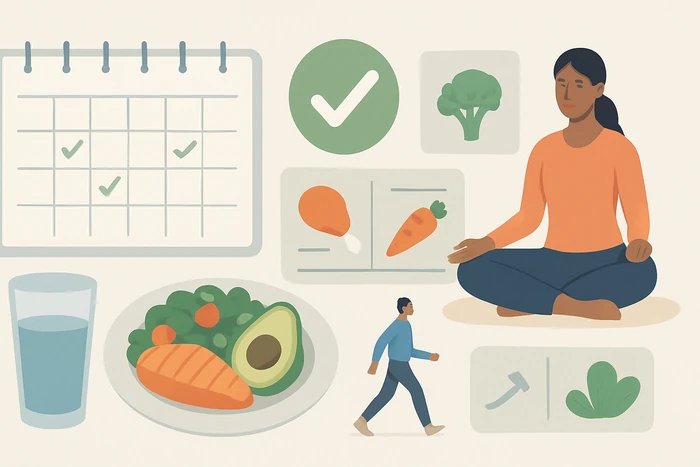
Tracking should be simple. A checkmark, calendar note, or weekly reflection can be enough. The purpose is not surveillance. The purpose is feedback. If a habit is not happening, the roadmap needs adjustment.
A helpful review asks:
– What worked this week?
– What felt too hard?
– What needs to be smaller?
– What needs to be prepared earlier?
– What situation caused the most disruption?
– What is the next easiest improvement?
Protect flexibility and avoid perfectionism
Perfectionism is one of the biggest threats to long-term change. A person who believes the plan is ruined after one different meal will struggle to build a lasting lifestyle. Flexible consistency is more useful than rigid compliance.
A flexible roadmap includes:
– backup meals
– restaurant options
– enjoyable foods
– social meals
– travel strategies
– minimum viable habits
– planned resets after disruption
– room for appetite changes
– room for cultural and family foods
Food should not become a source of fear. A healthy lifestyle includes nourishment, pleasure, culture, convenience, and real life. The best plan is not the strictest plan. It is the plan that can survive normal human weeks.
A useful mindset is: “Never miss the return.” Missing a habit can happen. Returning to the next helpful action is the skill.
Conclusion: a lifestyle reset is built one repeatable action at a time
A custom meal plan gives direction, but a healthy habits roadmap creates implementation. It turns nutrition protocols into behaviors that fit daily life. Habit stacking, minimum viable habits, environment design, identity-based change, friction planning, and simple tracking all help make the plan easier to repeat.
The goal is not to depend on motivation forever. The goal is to build a system where healthy choices become familiar, convenient, and emotionally sustainable. When meals, hydration, movement, sleep, and planning routines are connected to real cues and realistic backups, a customized diet journey can become a lifelong reset.
From plan to practice, the transformation happens through small actions repeated with patience. That is where effortless begins: not because the habits require no care, but because the roadmap makes them easier to return to again and again.