Busy professionals rarely struggle because they do not understand that food matters. The real challenge is execution. Back-to-back meetings, late calls, travel days, client deadlines, school runs, workouts, and unexpected decisions can turn even a well-intentioned nutrition plan into whatever is fastest. When the day is overloaded, food becomes reactive instead of strategic.
The executive protocol is a practical way to think about nutrition for people with demanding schedules. It is not a crash diet, a rigid meal plan, or a complicated tracking system. It is a repeatable decision framework that protects energy, focus, digestion, and long-term health when time is limited. The goal is not perfection. The goal is to make the better choice easy enough that it still happens on a busy day.
For high-performers, nutrition should support clear thinking, stable energy, and recovery. A meal that looks healthy on paper may not be useful if it requires too much preparation, creates an afternoon slump, or leaves the person hungry during important work. A smarter approach combines meal planning, food swaps, portable options, and simple rules that fit real professional life.

Why time pressure changes nutrition decisions
Most nutrition advice assumes a person has time to plan, shop, cook, eat slowly, and adjust. Busy professionals often do not. Their meals are shaped by availability, speed, stress level, social context, and meeting gaps. This creates a predictable pattern: breakfast gets skipped, lunch becomes rushed, caffeine replaces food, dinner becomes oversized, and snacks are chosen when hunger is already intense.
The problem is not a lack of discipline. It is a mismatch between the plan and the environment. A nutrition strategy that depends on long recipes and perfect timing will collapse under pressure. A better strategy anticipates friction and builds around it.
Time pressure affects food choices in several ways:
– decisions are made when energy is already low
– hunger is ignored until it becomes urgent
– high-sugar snacks become more appealing during stress
– hydration is forgotten during meetings
– protein and fiber are often under-consumed
– restaurant meals become the default
– late meals become larger than planned
The executive protocol begins by accepting these realities. Instead of asking busy people to behave like full-time meal planners, it creates a system that works when the calendar is full.
The foundation: stable energy over perfect eating
For professionals, the most useful nutrition goal is often stable energy. Energy stability comes from meals that combine protein, fiber-rich carbohydrates, healthy fats, and hydration. This combination helps reduce the sharp rise-and-crash pattern that can happen after meals built mostly around refined carbohydrates or sugary drinks.
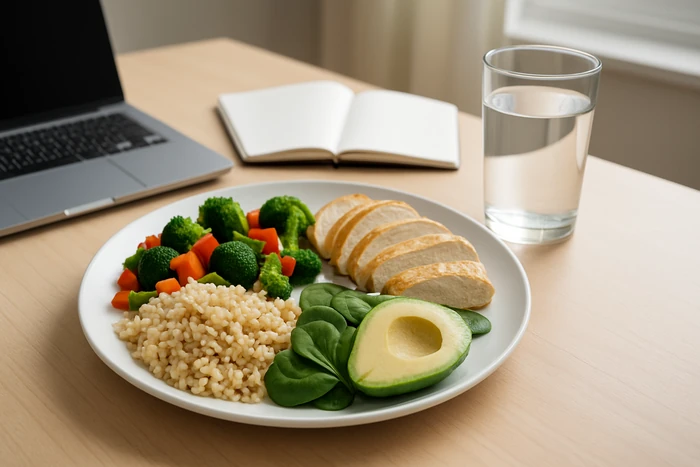
A practical plate does not need to be complicated:
– a protein source
– a high-fiber carbohydrate or colorful plant food
– a healthy fat
– water or unsweetened drink
– a portion size that supports comfort and focus
This could be eggs with whole-grain toast and fruit, Greek-style yogurt with nuts and berries, a chicken and quinoa bowl, tofu with vegetables and rice, lentil soup with olive oil and salad, or salmon with potatoes and greens. The exact foods can change based on culture, preferences, budget, and dietary needs. The structure stays consistent.
The goal is not to remove enjoyment from food. It is to prevent the most common productivity problem: meals that are either too light to sustain attention or too heavy to support focused work.
The 15-minute meal planning rule
Meal planning fails when it becomes too ambitious. Busy professionals need a planning method that can be completed quickly. The 15-minute rule is simple: once or twice per week, decide only the meals and backup options that prevent chaos. Do not plan every bite. Plan the decision points that usually go wrong.
The weekly planning session should answer four questions:
– What are the busiest days?
– Which meals are most likely to fail?
– What protein options are ready?
– What backup meals are available if the day changes?
For example, if Tuesday and Thursday are meeting-heavy, those days need portable lunches or reliable delivery choices. If breakfast often gets skipped, the plan needs two grab-and-go options. If dinner is late, the plan needs a lighter evening meal and a protein-rich snack earlier in the day.
A strong plan might include:
– two ready breakfasts
– two easy lunches
– one emergency desk snack
– one healthy restaurant default
– one quick dinner option
– one hydration habit
This is enough to reduce decision fatigue without turning food into a second job.
Smart food swaps for high-pressure days
Food swaps are powerful because they improve the existing routine instead of demanding a completely new one. A busy professional may not need to change every meal. They may simply need better defaults.
Useful swaps include:
– sugary coffee drink to coffee with milk and a protein-rich snack
– pastry breakfast to yogurt, fruit, and nuts
– plain refined-carb lunch to a bowl with protein and vegetables
– chips during late work to roasted chickpeas, nuts, or hummus with vegetables
– soda to sparkling water with citrus
– heavy late dinner to soup, eggs, fish, tofu, or a balanced salad with protein
– candy at the desk to fruit plus nut butter or a small portion of dark chocolate with nuts
The best swap keeps the convenience but improves the nutritional structure. If the new option is too difficult, it will not last. A good executive nutrition system respects the schedule.
Breakfast for people who do not have time for breakfast
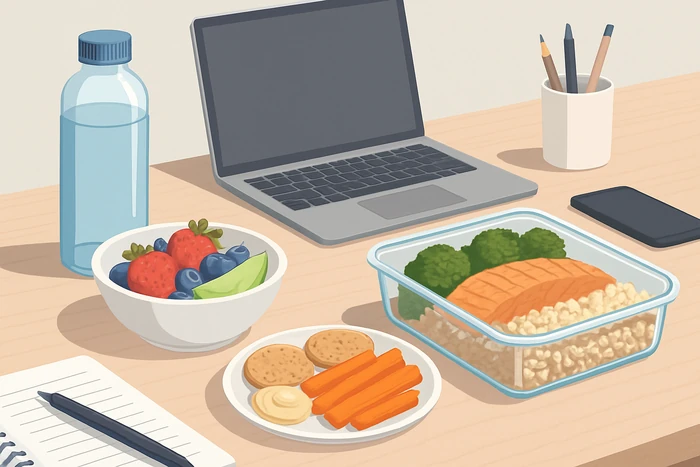
Breakfast is not mandatory for everyone, but skipping it becomes a problem when it leads to overeating later, heavy caffeine dependence, irritability, or poor concentration. For busy professionals, breakfast should be fast, portable, and protein-forward.
Good options include:
– Greek-style yogurt with berries and nuts
– overnight oats with protein-rich yogurt or seeds
– boiled eggs with fruit and whole-grain toast
– smoothie with protein, fruit, greens, and healthy fat
– cottage cheese with fruit and seeds
– tofu scramble wrap
– nut butter on whole-grain toast with fruit
– leftover dinner in a smaller portion
The key is preparation. If breakfast requires cooking from scratch during a rushed morning, it may not happen. If it is already assembled or takes under three minutes, it becomes realistic.
For people who prefer not to eat early, a mid-morning protein snack can serve the same purpose. The goal is to prevent the first meal from becoming an emergency decision.
Lunch between meetings
Lunch is often the most vulnerable meal for professionals. It gets delayed, eaten at the desk, replaced by snacks, or chosen from whatever is nearby. A practical lunch should be easy to eat, not too heavy, and built for sustained attention.
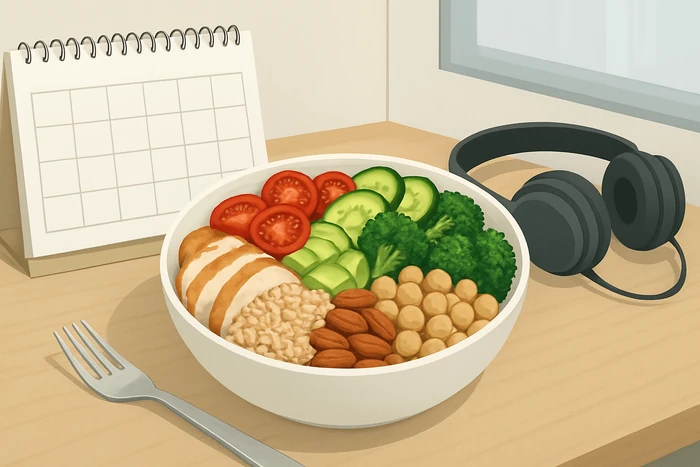
A reliable lunch formula is:
– protein: chicken, fish, eggs, beans, lentils, tofu, tempeh, yogurt, or lean meat
– fiber: vegetables, fruit, whole grains, beans, or lentils
– fat: olive oil, avocado, nuts, seeds, or tahini
– flavor: herbs, spices, citrus, salsa, or yogurt-based sauce
Bowl meals work especially well because they are flexible. A base of rice, quinoa, potatoes, greens, or beans can be paired with protein and vegetables. This creates variety without requiring a new recipe every day.
Restaurant lunches can also fit the protocol. Look for meals that include a clear protein source and vegetables. Add fiber when possible. Choose sauces intentionally rather than automatically. Avoid meals that leave you sleepy before a demanding afternoon.
Caffeine strategy instead of caffeine dependence
Caffeine can be useful, but it should not become a substitute for food, sleep, or hydration. Many busy professionals use caffeine to push through low energy caused by under-eating or poor meal timing. This can create a cycle of alertness followed by fatigue, irritability, and late-day cravings.
A smarter caffeine strategy includes:
– drink water before the first coffee
– pair coffee with food if caffeine causes jitters
– avoid using coffee as breakfast every day
– keep late-afternoon caffeine moderate
– notice whether caffeine affects sleep quality
– use meals and movement as energy tools too
The point is not to eliminate coffee. The point is to use it deliberately. When meals are more balanced, caffeine often becomes a support rather than a rescue tool.
Travel days and client dinners
Travel and business meals require flexible rules. The goal is not to control every ingredient, but to preserve the main structure: protein, fiber, hydration, and portion awareness.
For travel days, useful options include:
– nuts or seeds
– protein-rich yogurt
– fruit
– whole-grain sandwich
– hummus and vegetables
– tuna or bean salad
– protein bar with simple ingredients
– water bottle
– electrolyte option if travel is long or hot
For client dinners, focus on the larger pattern. Choose a protein-forward meal, include vegetables, and enjoy the experience without turning dinner into a nutrition debate. If the meal is richer than usual, balance the next meals with lighter, fiber-rich options. One meal does not define health. Repeated defaults do.
Building the executive food environment
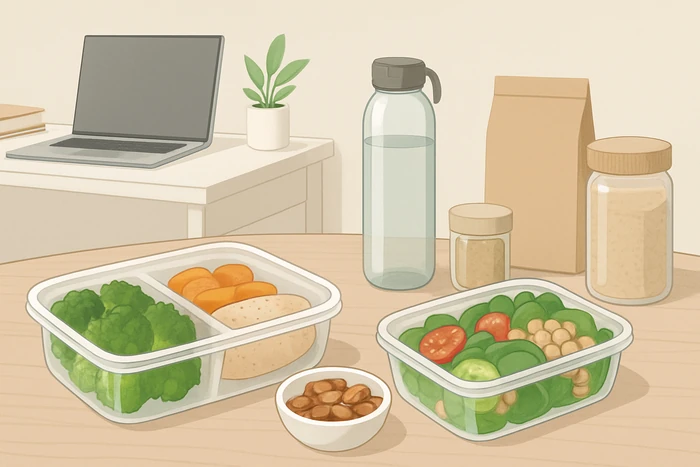
The food environment matters more than willpower. A professional who keeps only candy and crackers nearby will make different choices than someone who keeps protein snacks, fruit, water, and quick meal options available. The environment should make the better choice visible.
Useful desk or office options include:
– mixed nuts
– roasted chickpeas
– tuna or salmon packets
– whole-grain crackers
– nut butter packets
– herbal tea
– high-fiber protein bars
– shelf-stable soup
– fruit that travels well
– water bottle
At home, keep fast meal components ready:
– cooked grains
– washed greens
– eggs
– beans or lentils
– frozen vegetables
– yogurt
– pre-cut vegetables
– olive oil
– canned fish
– tofu or tempeh
– simple sauces
The goal is to reduce the number of decisions required when the day is already demanding.
A simple daily protocol
A practical daily protocol might look like this:
Morning
Drink water. Choose a fast protein-forward breakfast or mid-morning snack. Review the day and identify where lunch will fit.
Midday
Choose a balanced lunch before hunger becomes urgent. Include protein and fiber. Avoid relying only on caffeine.
Afternoon
Use a planned snack if meetings run late. Move briefly if possible. Hydrate before reaching for another stimulant.
Evening
Eat a satisfying dinner that supports recovery. Keep it simple on late nights. Avoid making dinner carry the entire day’s nutrition.
Weekly
Plan the highest-risk meals. Restock easy foods. Keep two backup options available.
This kind of system works because it is realistic. It does not require perfect cooking, strict tracking, or complicated rules. It simply creates enough structure to protect energy.
Conclusion: nutrition should make performance easier
Busy professionals need nutrition systems that match real schedules. The executive protocol focuses on stable energy, fast planning, smart swaps, and food environments that reduce decision fatigue. It is not about eating perfectly. It is about creating reliable defaults that support focus, mood, digestion, and recovery.
The best nutrition plan is the one that still works during a difficult week. When meals are structured, backups are ready, and better choices are convenient, professionals can maintain energy without sacrificing time or turning food into another source of stress.
Good nutrition should not compete with performance. It should make performance easier.